AI for Kids: A Parent’s Guide to Artificial Intelligence
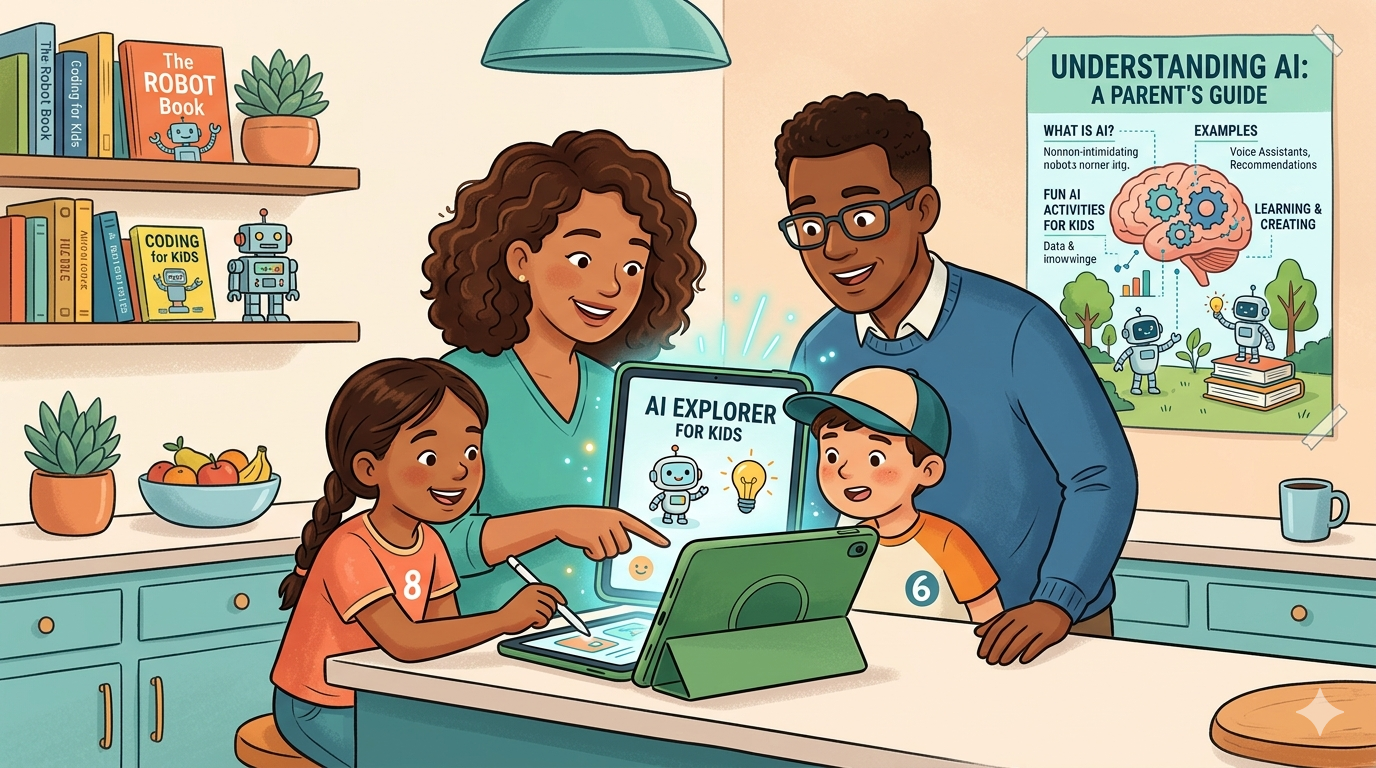
Artificial Intelligence (AI) is rapidly changing the world around us. From voice assistants and educational apps to search engines and smart devices, AI has become a part of everyday life. As a result, many parents are beginning to ask important questions about how this technology will impact their children.
Should kids learn about AI? Is AI safe? How can parents introduce artificial intelligence in a way that is educational, responsible, and age-appropriate?
Fortunately, children do not need to become computer programmers to benefit from understanding AI. Instead, they need opportunities to develop AI literacy, the ability to understand how AI works, where it is used, and how to use it responsibly.
In this guide, we’ll explore what AI is, why it matters, and how parents can help children ages 8–13 build future-ready technology skills.
What Is Artificial Intelligence?
Artificial Intelligence refers to computer systems that can perform tasks that typically require human intelligence. For example, AI can recognize patterns, answer questions, generate content, and make recommendations based on data.
Simply put, AI helps computers learn from information and make decisions.
Children encounter AI more often than they realize. In fact, many of the tools they already use rely on artificial intelligence behind the scenes.
For example:
- Voice assistants can answer questions.
- Educational apps can personalize lessons.
- Video platforms can recommend content.
- Translation tools can convert one language into another.
- Smart devices can respond to voice commands.
Therefore, learning about AI is becoming just as important as learning how to use computers and the internet.
Why Should Kids Learn About AI?
As technology continues to evolve, AI will play an increasingly important role in education, careers, and daily life.
Consequently, helping children understand AI today can prepare them for tomorrow’s opportunities.
Building Digital Literacy
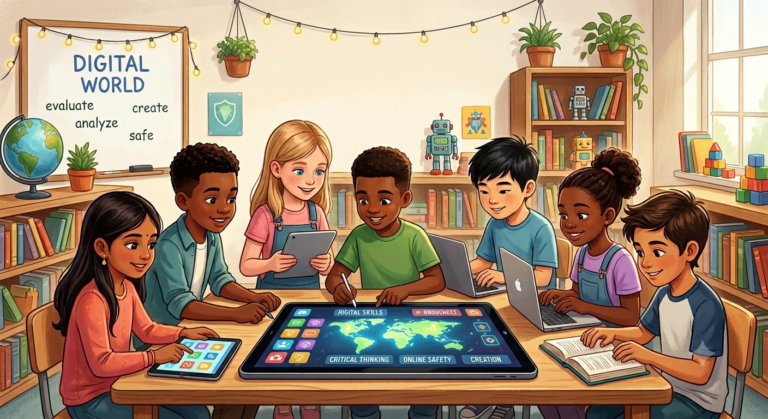
First and foremost, AI education strengthens digital literacy.
Rather than simply using technology, children learn how technology works. As a result, they become informed users who can think critically about the tools they interact with every day.
Encouraging Critical Thinking
Additionally, AI can encourage children to ask better questions and evaluate information more carefully.
For example, kids can learn to:
- Verify facts
- Compare sources
- Analyze information
- Recognize bias
These skills are valuable both online and offline.
Preparing for Future Careers
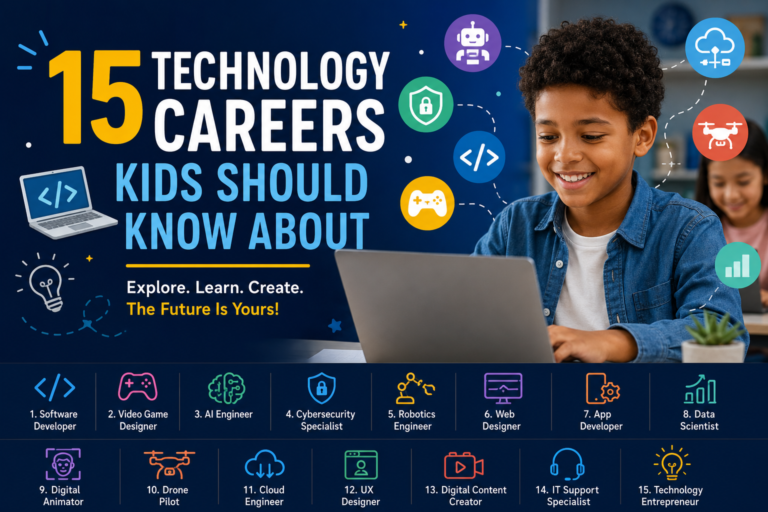
Looking ahead, many future careers will involve AI in some capacity.
Whether a child becomes a teacher, healthcare professional, entrepreneur, artist, engineer, or scientist, AI will likely be part of their work environment.
Therefore, early exposure can provide a significant advantage.
Supporting Creativity
Contrary to popular belief, AI does not have to limit creativity.
In fact, AI can help children:
- Generate story ideas
- Create artwork
- Explore music
- Brainstorm projects
As a result, children can use AI as a creative partner rather than simply a productivity tool.
How AI Is Already Part of Everyday Life
Many parents are surprised to discover how frequently children already interact with AI.
In fact, artificial intelligence powers many tools that families use every day.
Educational Apps
Many educational platforms use AI to personalize lessons and adapt content based on a student’s progress.
Consequently, children receive learning experiences tailored to their needs.
Search Engines
Search engines use AI to organize information and provide relevant results.
Therefore, every search a child performs may involve artificial intelligence.
Streaming Platforms
Similarly, streaming services use AI algorithms to recommend videos, music, and content.
Video Games
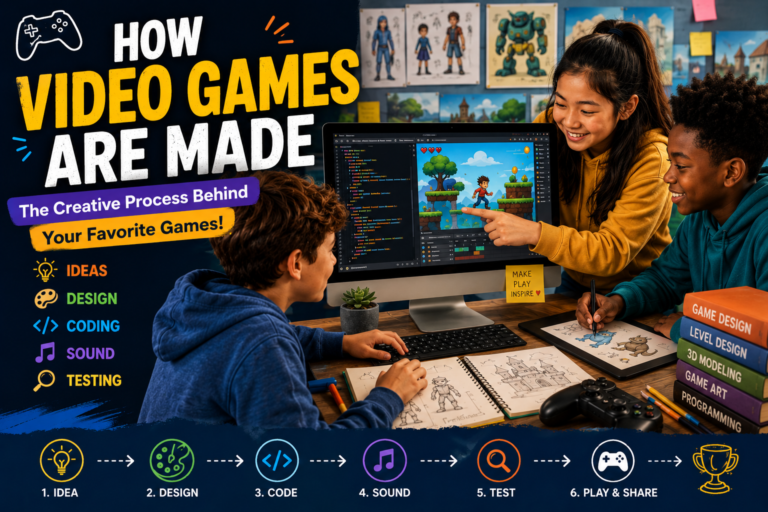
AI also plays a major role in gaming.
For example, AI can control non-player characters, adjust difficulty levels, and create interactive experiences.
Smart Devices
Meanwhile, smart speakers and voice assistants use AI to understand language and respond to requests.
Because AI is already integrated into daily life, understanding it is becoming an essential digital skill.
Benefits of AI for Kids
When used responsibly, AI can be a powerful educational tool.
Personalized Learning Experiences
One major benefit is personalized learning.
AI-powered tools can adapt lessons based on a child’s strengths and challenges. As a result, students can learn at a pace that works best for them.
Encouraging Creativity and Innovation
Furthermore, AI can inspire creativity.
Children can use AI to:
- Write stories
- Design graphics
- Explore new ideas
- Develop creative projects
Rather than replacing imagination, AI can help expand it.
Building Problem-Solving Skills
AI tools often encourage experimentation and exploration.
For example, children may test different approaches, analyze results, and refine their ideas. Consequently, they develop valuable problem-solving skills.
Preparing for Future Careers
Finally, exposure to AI helps children become comfortable with emerging technologies.
This familiarity can increase confidence and create new opportunities later in life.
Potential Risks Parents Should Understand
Although AI offers many benefits, parents should also understand potential risks.
Privacy and Personal Information
Children should never share sensitive information online.
This includes:
- Home addresses
- Phone numbers
- Passwords
- School details
Therefore, parental guidance remains essential.
Misinformation and Factchecking
AI tools are powerful, but they are not perfect.
Occasionally, AI may provide inaccurate information. Consequently, children should learn how to verify facts using trusted sources.
Excessive Dependence on Technology
Similarly, children should avoid becoming overly dependent on AI tools.
AI should support learning—not replace independent thinking.
How to Teach Kids to Use AI Responsibly
Responsible AI use begins with education.
Teaching AI as a Tool
First, help children understand that AI is a tool not a replacement for learning.
Kids should still think critically, solve problems, and develop their own ideas.
Encourage Good Questions
Secondly, teach children how to ask thoughtful questions.
Better questions often lead to better results.
Promote Ethical Technology Use
In addition, discuss topics such as honesty, fairness, and responsible digital citizenship.
These conversations help children develop healthy technology habits.
Stay Involved
Finally, stay engaged in your child’s digital learning journey.
Ask questions about what they’re exploring and encourage discussions about technology.
Fun Ways to Introduce AI to Children
You do not need a technology background to introduce AI concepts.
Explore Educational AI Tools
Many platforms offer age-appropriate AI experiences designed specifically for students.
Create Stories Together
Ask AI to generate story prompts and encourage children to create their own endings.
Discuss Everyday Examples
Point out examples of AI in daily life.
For instance, discuss how recommendations appear on streaming platforms or how voice assistants answer questions.
Encourage Curiosity
Most importantly, encourage children to ask questions.
Curiosity is often the first step toward innovation.
The Future of AI and Today’s Youth
Technology continues to evolve at an incredible pace.
As AI becomes more common, children will need more than basic technology skills. They will need digital literacy, adaptability, critical thinking, and creativity.
Therefore, introducing AI concepts early can help young people become confident learners and future leaders.
The goal is not to make every child an AI expert. Instead, it is to help children understand the technology shaping their world.
How JayQuad Foundation Is Preparing Future Tech Leaders
At JayQuad Foundation, we believe every child deserves access to opportunities that prepare them for the future.
Through our youth development programs, we help children build:
- Digital literacy skills
- Technology confidence
- Critical thinking abilities
- Responsible online habits
- Exposure to emerging technologies, including AI
Furthermore, our hands-on learning experiences encourage creativity, collaboration, and problem-solving.
By investing in youth today, we are helping create future-ready leaders for tomorrow.
Frequently Asked Questions About AI for Kids
Is AI safe for children?
Yes. AI can be safe when children use age-appropriate tools under adult supervision. Additionally, parents should teach children about privacy, online safety, and responsible technology use.
At what age should children learn about AI?
Children can begin learning basic AI concepts as early as ages 8–10. At this stage, the focus should be on understanding how AI works rather than advanced programming.
Can AI help children learn?
Absolutely. AI-powered educational tools can personalize learning experiences, provide feedback, and support skill development.
Will AI replace teachers?
No. AI is designed to support learning, not replace teachers. Human guidance, mentorship, and relationships remain essential for a child’s development.
What AI skills should children learn first?
Children should start with digital literacy, online safety, critical thinking, and understanding how AI tools work.
Final Thoughts
Artificial Intelligence is no longer a futuristic concept it is part of everyday life.
Because AI will continue to influence education, careers, and communication, helping children understand this technology is becoming increasingly important. Furthermore, AI literacy empowers young people to become creators, innovators, and informed digital citizens.
By encouraging curiosity, teaching responsible technology use, and providing opportunities for hands-on learning, parents can help children develop the skills needed for success in a rapidly changing world.
The future belongs to those who understand technology and today’s children have an incredible opportunity to lead the way.
Ready to Help Your Child Build Future-Ready Skills?
Explore JayQuad Foundation’s youth technology programs and discover how we are equipping young learners with digital skills, AI awareness, and the confidence to succeed in tomorrow’s world.