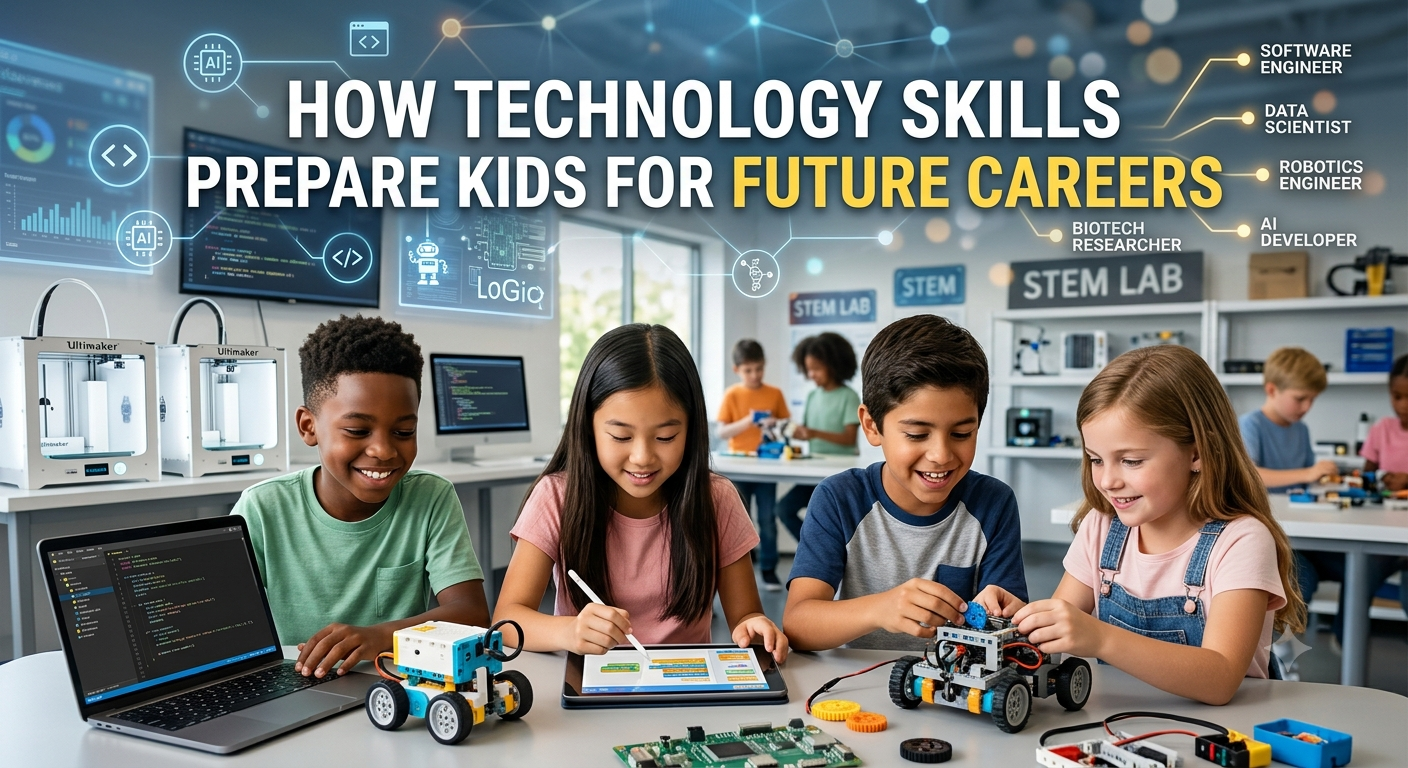
How Technology Skills Prepare Kids for Future Careers
The world of work is changing faster than ever. Technology is now part of almost every industry, from healthcare and education to business, entertainment, and transportation. As a result, children today need more than traditional classroom knowledge to prepare for tomorrow’s opportunities.
They also need technology skills.
Learning technology skills at a young age can help children become more confident, creative, and prepared for the future. In addition, these skills can help kids discover careers they may never have considered before.
The good news is that children do not need to become technology experts overnight. Instead, they can start with simple skills and build their knowledge over time.
Let’s explore why technology education matters for the next generation.
Technology Is Changing the World of Work
Technology has already transformed the way people work.
For example, doctors use digital tools to care for patients. Teachers use technology to create engaging lessons. Businesses rely on software to communicate and manage information.
Meanwhile, new fields such as artificial intelligence, robotics, cybersecurity, and data science continue to grow.
Therefore, children who develop technology skills early may have more opportunities to adapt to the changing world of work.
Digital Literacy Is a Foundation for Success
First, children need strong digital literacy skills.
Digital literacy means knowing how to use technology safely, responsibly, and effectively. It includes everything from navigating digital devices to finding reliable information online.
For example, children can learn how to:
- Use computers and digital devices
- Search for information
- Evaluate online sources
- Communicate responsibly
- Protect personal information
As a result, children become more confident when using technology at school and at home.
Coding Teaches Kids How to Solve Problems
Coding is another valuable technology skill for children.
Although coding may seem complicated at first, beginner-friendly programs can make learning fun. Kids can create simple games, animations, and interactive projects while learning basic programming concepts.
More importantly, coding teaches children how to break large problems into smaller steps.
Consequently, they develop problem-solving skills that can be useful in many different careers, not just technology jobs.
Creativity Is Just as Important as Technology
Technology and creativity go hand in hand.
For example, children can use digital tools to create:
- Artwork
- Videos
- Animations
- Games
- Presentations
- Stories
In addition, creative technology projects allow children to express their ideas in new ways.
Therefore, technology education should not focus only on technical skills. It should also encourage imagination, creativity, and innovation.
Technology Builds Confidence
Learning a new technology skill can be challenging. However, overcoming those challenges can help children build confidence.
Imagine a child creating their first digital project. At first, they may not know where to begin. Then, after practicing, they complete the project and see their ideas come to life.
As a result, they learn an important lesson: “I can learn something new if I keep trying.”
That confidence can be carried into school, friendships, and future career opportunities.
Kids Can Explore Careers Through Technology
Technology skills also help children discover potential career paths.
For example, a child who enjoys coding might explore software development. Meanwhile, a child who loves art could become interested in digital animation or UX design.
Similarly, children who enjoy solving puzzles might discover cybersecurity. Those who love building things could explore robotics or engineering.
Therefore, early technology education can help kids connect their interests with future possibilities.
Technology Skills Help Kids Become Adaptable
The jobs children will have as adults may look very different from today’s jobs.
In fact, some future careers may not even exist yet.
Because technology changes so quickly, adaptability is essential. Children need to become comfortable with learning new tools and exploring unfamiliar ideas.
By practicing technology skills now, kids can develop the confidence to keep learning throughout their lives.
The Most Important Skills Go Beyond Technology
While technical skills are valuable, children also need strong human skills.
Fortunately, technology projects can help develop both.
Kids can practice:
- Problem-solving
- Communication
- Teamwork
- Creativity
- Critical thinking
- Persistence
For example, building a robotics project may require children to work together, share ideas, and solve unexpected problems.
As a result, technology education can prepare children for both technical and non-technical careers.
How Parents Can Help Kids Build Technology Skills
Parents do not need to be technology experts to support their children’s learning.
Instead, they can:
- Encourage Curiosity – Ask children what they want to learn and explore their interests together.
- Turn Screen Time into Skill Time – Encourage kids to use technology to create, build, and learn not just consume content.
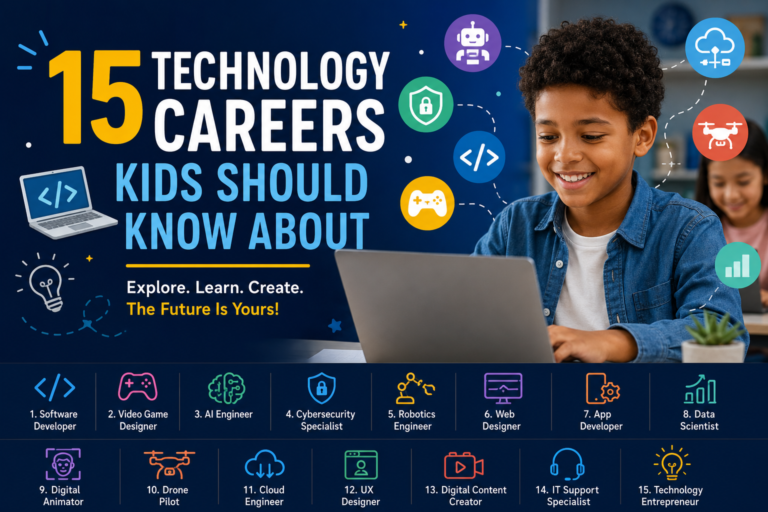
- Explore Technology Careers – Talk about careers such as software development, cybersecurity, robotics, AI, digital design, and game development.
- Support Hands-On Learning – Look for technology programs, workshops, camps, and community activities where children can learn by doing.
Most importantly, encourage children to stay curious and keep trying.
How JayQuad Foundation Is Preparing Future Tech Leaders
At JayQuad Foundation, we believe every child deserves the opportunity to develop skills that prepare them for the future.
Our youth programs help children ages 8–13 explore digital skills in a safe, supportive, and engaging environment.
Through hands-on learning, children can develop:
- Digital literacy
- Technology confidence
- Problem-solving skills
- Creativity
- Critical thinking
- Responsible technology habits
Furthermore, we want young people to see themselves as creators and innovators—not simply users of technology.
By giving children access to digital skills today, we can help them build confidence for tomorrow.
Frequently Asked Questions
Why are technology skills important for kids?
Technology skills help children succeed in school, explore future careers, solve problems, and adapt to a changing world.
What technology skills should kids learn?
Children can start with digital literacy, online safety, coding, creative technology, problem-solving, and responsible technology use.
Does every child need to learn coding?
Not necessarily. However, coding can teach valuable problem-solving and logical thinking skills. Children can also explore many other technology areas, including digital design, robotics, AI, and cybersecurity.
How can kids prepare for future careers?
Kids can prepare by developing technology skills while also strengthening creativity, communication, teamwork, and critical thinking.
Final Thoughts
Technology skills are no longer just for people who want to work in the technology industry. Instead, they are becoming essential skills for almost every career.
By learning digital literacy, coding, creative technology, and problem-solving, children can become more confident and prepared for the future.
Most importantly, technology education gives kids the opportunity to explore, create, and discover what they can achieve. The future may be changing quickly. However, one thing is certain: children who learn how to adapt, create, and use technology responsibly will be better prepared to meet tomorrow’s opportunities.