Digital Skills vs Traditional Learning: Why Kids Need Both
There’s an ongoing debate in education today: Should children focus more on traditional learning or digital skills?
The truth is, this isn’t an either or decision.
Children need both.
To truly prepare kids for the future, we must combine the strengths of traditional education with the power of digital learning. When these two approaches work together, they create confidence, capability, and adaptable learners.
The Strength of Traditional Learning
Traditional learning lays the foundation for how children understand the world.
Skills like:
- Reading comprehension
- Writing
- Mathematics
- Critical thinking
These are essential building blocks that support all other learning.
In a structured classroom environment, children also learn discipline, focus, and how to follow instruction skills that carry into every area of life.
The Power of Digital Skills
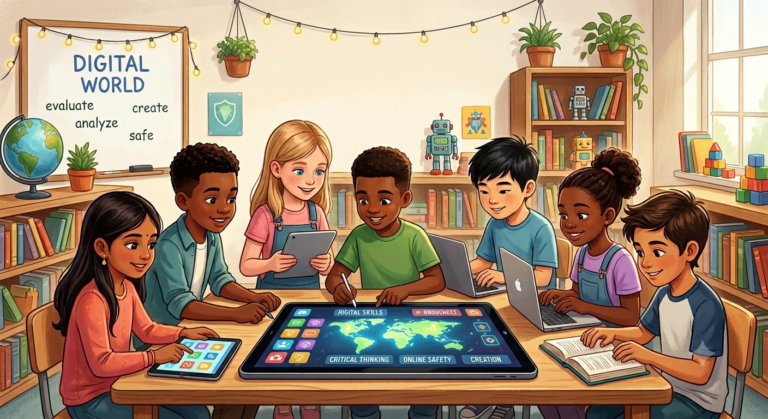
While traditional learning builds the foundation, digital skills prepare kids for the world they are growing into.
Today’s children are growing up in a technology-driven society. Digital skills help them:
- Navigate technology with confidence
- Solving problems using digital tools
- Create content instead of just consuming it
- Explore future career paths early
From coding to digital design, these skills unlock creativity and innovation.
Why Balance Matters
Relying on only one approach creates a gap.
- Traditional learning alone may not prepare kids for modern careers
- Digital skills alone may lack depth in foundational knowledge
But when combined, they create a powerful learning experience.
For example:
- A child can use math skills to build a simple game
- Writing skills can help them create content or presentations
- Critical thinking supports both academic and digital problem-solving
This balance helps children connect what they learn to real-world applications.
Preparing Kids for the Future
The future workforce will require both technical and human skills.
Children who develop both traditional and digital abilities are more likely to:
- Adapt to new technologies
- Think creatively
- Communicate effectively
- Solving complex problems
These are the skills that define future-ready individuals.
How Parents and Communities Can Support Both
Supporting both types of learning doesn’t have to be complicated.
Start by:
- Encouraging reading and academic practice
- Introducing basic digital tools and programs
- Enrolling kids in structured tech programs
- Creating a balanced daily routine
The goal is not perfection—it’s exposure and consistency.
Conclusion
Digital skills and traditional learning are not competitors, they are partners.
When children have access to both, they become more confident, capable, and prepared for whatever the future holds.
Call to Action
Give your child the advantage of both worlds, explore our youth programs today.